 Acceso sin colas disponible
 Pompeya y el Vesubio en un solo día: ¿es posible y merece la pena?
La caminata hasta la cumbre, el traslado desde Ercolano y la ajustada logística de combinar la ciudad con el volcán que la sepultó.
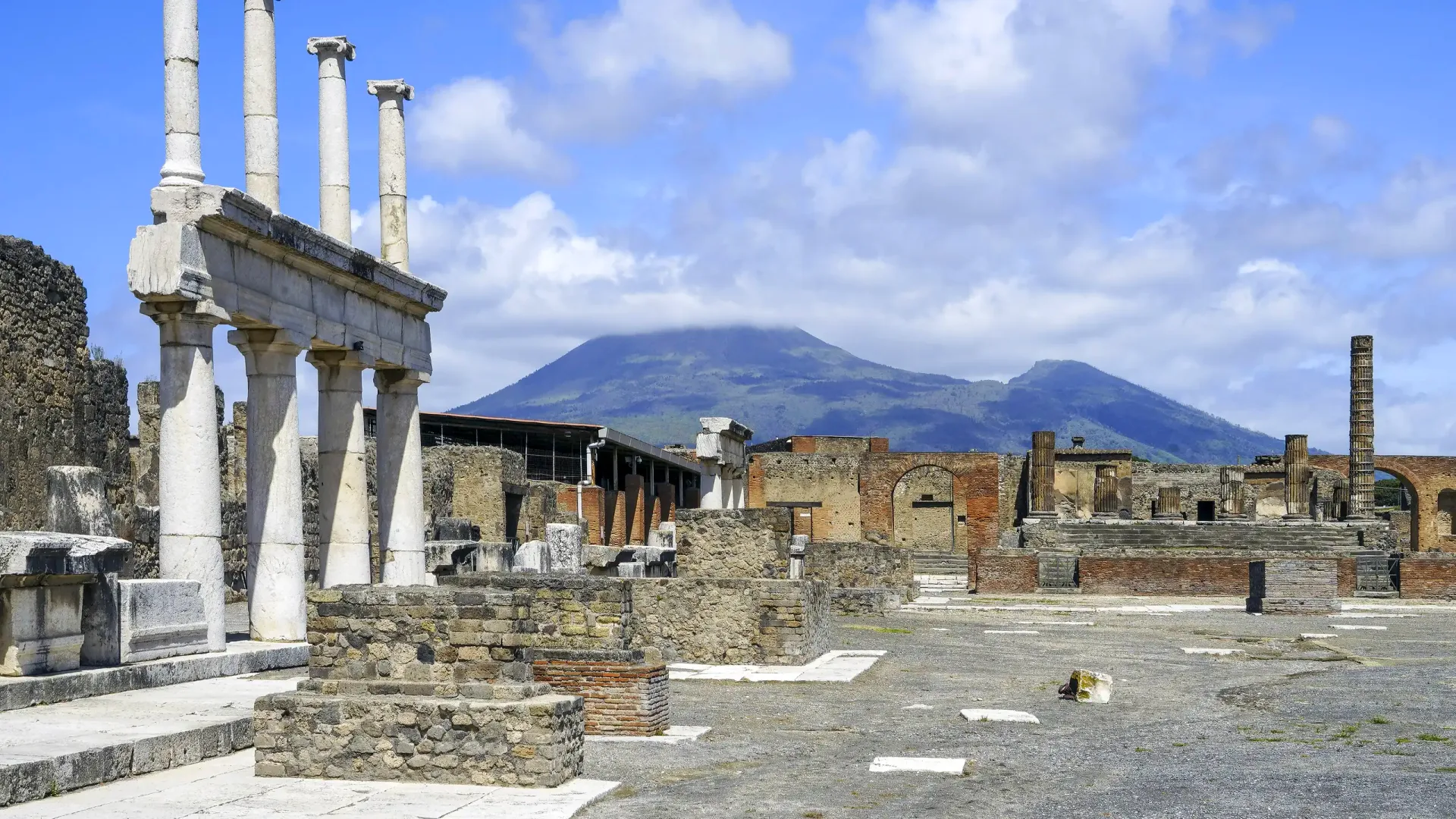
Los visitantes observan el mapa de la bahía de Nápoles y ven Pompeya y el Vesubio casi superpuestos, así que surge la pregunta natural: ¿puedo visitar ambos en un solo día? La respuesta técnica es que sí — distan unos diez kilómetros y existe la infraestructura operativa para conectarlos. La respuesta honesta de conserjería es que la jornada resulta más dura de lo que parece. Pompeya por sí sola merece entre cuatro y seis horas sin prisas; la cumbre del Vesubio implica un autobús lanzadera más una caminata de ida y vuelta de noventa minutos sobre un sendero de ceniza volcánica a pleno sol, y combinar ambos en un mismo día natural exige concesiones reales en cada lugar. Esta guía repasa la logística práctica, los horarios, las entradas y la recomendación del conserje sobre si intentar el día combinado o dividirlo en dos.
Dos recintos distintos, dos entradas independientes.
Lo primero que hay que entender es que Pompeya y el Vesubio dependen de administraciones distintas y se venden mediante sistemas de entrada diferentes. Pompeya está gestionada por el Ministerio de Cultura italiano, con entradas expedidas a través de la plataforma oficial en una de dos franjas horarias (mañana de 09:00 a 13:00 o tarde de 13:00 a 17:30). El Vesubio (concretamente la ruta al cráter del Gran Cono) depende del Parque Nacional del Vesubio, con entradas vendidas en su propia plataforma y acceso mediante autobús lanzadera desde la estación de Ercolano hasta el aparcamiento superior, a unos 1.000 metros de altitud. No existe una entrada combinada. El pase de tres días de la Gran Pompeya solo cubre los yacimientos arqueológicos de la red pompeyana; no incluye el acceso al Vesubio.
Ambas entradas deben reservarse por separado y con antelación durante la temporada alta. El acceso a la cima del Vesubio funciona con un sistema de franjas horarias, ya que el sendero del cráter superior tiene límites de aforo; los fines de semana de verano, los turnos pueden agotarse con varios días de antelación. El autobús lanzadera desde Ercolano (operado por EAV o empresas independientes según la temporada) no suele tener la misma presión de aforo, pero cuenta con un horario publicado que el visitante debe respetar. Antes de comprometerse con un plan de un día, confirme la disponibilidad actual de entradas, los horarios del autobús y el estado de apertura del sendero de la cumbre: la cima se cierra ocasionalmente por condiciones meteorológicas adversas, y si el día de su llegada está cerrada, el trayecto en autobús habrá sido en vano.
La entrada de Pompeya incluye una franja horaria reservada (mañana o tarde) y exige el nombre del visitante. La del Vesubio es más flexible dentro de su ventana, pero también tiene horario asignado. Organízalas con cuidado: si pretendes hacer ambas en un mismo día, tu ventana para Pompeya debe ser la de la mañana (09:00–13:00) — no existe una versión realista de este itinerario que comience con una entrada vespertina a Pompeya.
El Itinerario Realista de un Día
Si tu objetivo es hacer ambas visitas en un solo día, el plan realista empieza temprano. Toma la línea Circumvesuviana Sorrento desde Nápoles o Sorrento para llegar a Pompei Scavi-Villa dei Misteri antes de las 09:00. Accede a Pompeya en el turno de las 09:00. Recorre únicamente un circuito concentrado de las ínsulas centrales —Foro, Casa del Fauno, Casa de los Vettii, Lupanar y los vaciados de yeso del Granai del Foro— y sal por Porta Marina antes de las 12:00. Se trata de una visita de aproximadamente tres horas que abarca los puntos clave, pero que omite expresamente la Villa de los Misterios, el paseo por la Via dell'Abbondanza oriental, el Anfiteatro y el Jardín de los Fugitivos.
Desde Pompei Scavi, toma la Circumvesuviana de vuelta hacia el norte hasta Nápoles y baja en Ercolano Scavi (unos veinte minutos). Desde la estación de Ercolano, coge el autobús lanzadera que conecta la estación con el aparcamiento superior del Vesubio (unos cuarenta minutos de carretera de subida, con salidas a intervalos publicados —normalmente cada cuarenta minutos durante el día en temporada alta). Compra tu billete para la cumbre del Vesubio con antelación, eligiendo una ventana de entrada a primera hora de la tarde. La caminata al cráter del Gran Cono dura aproximadamente noventa minutos ida y vuelta por un sendero de ceniza volcánica, con una subida moderada hasta el borde —en altitud, bajo el sol, sobre una ladera expuesta. Regresa al aparcamiento superior, toma la lanzadera de vuelta a la estación de Ercolano y coge la Circumvesuviana de regreso a tu punto de partida.
El día completo, desde la salida del punto de encuentro por la mañana hasta el regreso al atardecer, dura entre doce y trece horas. Caminarás de quince a dieciocho kilómetros por terreno irregular y sin sombra. Verás aproximadamente un tercio de Pompeya. Ascenderás al cráter de la cumbre del Vesubio y mirarás hacia su interior, y contemplarás la bahía de Nápoles desde un mirador que bien merece el esfuerzo. No verás la Villa de los Misterios, el anfiteatro ni ninguna de la mitad oriental de Pompeya.
Dividir la visita en dos días casi siempre es la mejor opción.
La opción de dividir la visita en dos jornadas es la más sensata: cada yacimiento merece más tiempo del que permite el plan de un solo día. Una jornada completa en Pompeya, con entrada a las 09:00 y un billete Plus, te lleva por las ínsulas centrales durante la mañana fresca, las villas suburbanas (de los Misterios, de Diomedes) antes de comer, y el paseo por la Via dell'Abbondanza hasta el anfiteatro, volviendo por el Jardín de los Fugitivos por la tarde. Esta es la visita que la mayoría de viajeros desearían haberle dedicado a Pompeya. El Vesubio, en su propio día, permite llegar con calma por la mañana a la estación de Ercolano, un trayecto en lanzadera sin agobios de tiempo, un paseo tranquilo por el cráter con paradas para fotos y los paneles explicativos geológicos, y una tarde libre para visitar Herculano (a veinte minutos en tren de vuelta) o el Museo Arqueológico Nacional de Nápoles.
La división en dos días también reduce el esfuerzo físico. El plan combinado de un solo día exige caminar entre quince y dieciocho kilómetros sobre dos tipos de terreno exigentes y muy distintos —calles antiguas empedradas de basalto por la mañana y pendiente de ceniza volcánica por la tarde—, con una subida a media tarde en altitud y a pleno sol. Los visitantes mayores, las familias con niños y quienes no están acostumbrados a largas jornadas a pie lo encuentran realmente agotador. La versión de dos días mantiene cada jornada por debajo de los diez kilómetros sobre un único tipo de terreno, con pausas para sentarse factibles.
El argumento más sólido a favor de separar las visitas es la ventaja de Herculano. Al repartir Pompeya y el Vesubio en dos días, te pones al alcance Herculano. El transbordador de Ercolano para el Vesubio sale desde la misma estación que la entrada a Herculano, y una mañana en el Vesubio más una tarde en Herculano conforman una jornada natural y bien equilibrada. Un itinerario de tres días por la bahía de Nápoles que incluya Pompeya, luego Vesubio más Herculano, y después el Museo Arqueológico de Nápoles es, con diferencia, la mejor semana posible para recorrer las ciudades sepultadas por la erupción. El plan de un día con Pompeya y Vesubio te da dos lugares famosos a costa de no ver bien ninguno de los dos; la separación te ofrece cuatro.
La propia caminata a la cima del Vesubio
Desde el aparcamiento superior, a unos 1.000 metros de altitud, un amplio sendero de ceniza volcánica serpentea por la ladera exterior del cono hasta el borde del cráter, a aproximadamente 1.170 metros. El recorrido supone un desnivel de unos 200 metros en una distancia de ida de aproximadamente 850 metros — moderado para estándares de montaña, pero expuesto, polvoriento y sin sombra. Calcule cuarenta y cinco minutos para la subida a ritmo tranquilo; el trayecto completo, incluyendo el tiempo en el borde, es de aproximadamente noventa minutos. Es imprescindible llevar calzado cerrado — las sandalias y las zapatillas de malla se llenan de fina ceniza volcánica a los cincuenta pasos.
En el borde del cráter, un sendero señalizado recorre parte del perímetro del cono activo, con paneles explicativos en italiano e inglés que detallan la secuencia eruptiva, la geología de la cámara magmática y el programa actual de vigilancia (el Vesubio es uno de los volcanes más monitorizados del planeta y se encuentra en fase de quietud). La vista hacia el interior del cráter es la imagen estrella: un profundo cono gris ceniza con manchas de azufre y leve actividad fumarólica en la base. La panorámica que se extiende sobre la bahía de Nápoles —Capri al sur, Nápoles e Isquia al oeste, la península Sorrentina recortándose en la distancia— es, en un día despejado, uno de los grandes paisajes italianos.
Lleve agua (al menos un litro por persona), una chaqueta cortavientos (la cima es más fresca y ventosa que la base del volcán, y está expuesta), gafas de sol, protección solar, un sombrero que no se vuele y una cámara. Está prohibido volar drones dentro del parque nacional. La cima se cierra por mal tiempo —viento fuerte, tormentas eléctricas y (en raras ocasiones) actividad volcánica—, y el cierre se publica el mismo día en la web del Parco Nazionale del Vesuvio y en la estación de Ercolano. El principal riesgo de fijar la visita al Vesubio en un día concreto es hacer un viaje en autobús en balde hasta una cima cerrada; la flexibilidad meteorológica es una ventaja significativa del plan de dos días frente al combinado de un día.
Preguntas frecuentes
¿Existe una entrada combinada para Pompeya y el Vesubio?
No. Pompeya y el Vesubio dependen de distintas administraciones y se venden a través de sistemas de entradas diferentes. Adquiere la de Pompeya en la plataforma oficial de venta, con una franja horaria de mañana o tarde reservada, y el acceso a la cima del Vesubio por separado a través del parque nacional.
¿Se pueden hacer las dos cosas en un mismo día?
Sí, pero con concesiones reales. El plan de un día exige entrada a Pompeya a las 09:00, una visita concentrada de tres horas solo por las ínsulas centrales, un salto en la Circumvesuviana hasta Ercolano, el autobús lanzadera al aparcamiento superior del Vesubio y la caminata de noventa minutos hasta la cima. Verás aproximadamente un tercio de Pompeya y el cráter del Vesubio. La jornada completa dura entre doce y trece horas, con quince a dieciocho kilómetros de caminata.
¿Qué se pierde en la visita de un día a Pompeya?
La Villa de los Misterios, toda la mitad oriental de la ciudad (Via dell'Abbondanza, el Anfiteatro, la Gran Palestra, el Jardín de los Fugitivos) y las villas suburbanas (Diomedes, Boscoreale). La etapa de Pompeya en un solo día solo puede abarcar de forma realista las ínsulas centrales: el Foro, la Casa del Fauno, la Casa de los Vettii, el Lupanar y los vaciados de yeso de los cuerpos en los Granai del Foro.
¿Cómo llego de Pompeya al Vesubio?
Toma la línea Circumvesuviana Sorrento desde Pompei Scavi-Villa dei Misteri en dirección norte hacia Nápoles y baja en Ercolano Scavi (unos veinte minutos). Desde la estación de Ercolano, coge el autobús lanzadera hasta el aparcamiento superior del Vesubio (unos cuarenta minutos de carretera de subida, con salidas a intervalos publicados durante el día en temporada). Los billetes del autobús se compran en la estación o con el operador.
¿Cuánto dura la caminata a la cima del Vesubio?
El paseo desde el aparcamiento superior hasta el borde del cráter es de unos 850 metros en un solo sentido, con un desnivel de aproximadamente 200 metros, lo que supone cuarenta y cinco minutos a un ritmo tranquilo. Contando el tiempo en el borde y la vuelta, calcula hora y media en total. El sendero es de ceniza volcánica expuesta, sin sombra — son imprescindibles calzado cerrado, agua, sombrero y protección solar.
¿Es difícil la caminata a la cima del Vesubio?
Moderada. El sendero es ancho y con buen firme, pero está expuesto al sol y al viento; la superficie es de ceniza volcánica fina que exige trabajo de gemelos, y la altitud (unos 1.170 metros en el borde) es suficiente para notar la respiración en caminantes menos entrenados. La mayoría de los adultos con movilidad normal completan el paseo cómodamente con descansos; los niños muy pequeños, los visitantes mayores con movilidad reducida y quienes tengan problemas cardíacos deberían consultar a un médico y prever tiempo adicional.
¿Qué ocurre si la cumbre está cerrada por mal tiempo?
La cima del Vesubio se cierra por vientos fuertes, tormentas eléctricas y (excepcionalmente) actividad volcánica. El cierre se publica el mismo día en la web del Parco Nazionale del Vesuvio y en la estación de Ercolano. Los cierres por meteorología son el principal riesgo de fijar el Vesubio a un día concreto, especialmente en primavera y otoño. Incorporar flexibilidad climática repartiendo la visita en dos jornadas es uno de los argumentos más sólidos en contra del plan combinado de un solo día.
¿Es seguro visitar el Vesubio?
Sí, el Vesubio se encuentra en fase de quietud y es uno de los volcanes más vigilados del planeta, con un seguimiento sísmico, geoquímico y de deformación continuo a cargo del Istituto Nazionale di Geofisica e Vulcanologia italiano. El acceso de visitantes se suspende de inmediato si cualquier indicador de monitoreo varía. El sendero de la cumbre está en buen estado y es patrullado por el personal del parque nacional durante el horario de apertura.
¿Puedo combinar la visita al Vesubio con Herculano en lugar de eso?
Sí, y esta es la combinación preferida del conserje. El transbordador al Vesubio sale desde la misma estación de Ercolano que la entrada a Herculano, así que una mañana en el Vesubio más una tarde en Herculano conforman un día natural y bien equilibrado. Combinado con Pompeya en otro día y el Museo Arqueológico Nacional de Nápoles en un tercero, este es el mejor itinerario posible para visitar las ciudades de la erupción.
¿Mejor solo Pompeya y saltarme el Vesubio?
Si solo dispones de un día en la zona, sí: visitar únicamente Pompeya en el turno de las 09:00 con una entrada Plus y a un ritmo tranquilo te ofrece una jornada más enriquecedora que el plan combinado de Pompeya y el Vesubio. El Vesubio es espectacular, pero su experiencia se reduce a media hora en el borde del cráter; Pompeya es el motivo principal por el que venir a la bahía de Nápoles. Deja el Vesubio para una segunda visita o para un viaje futuro.