 Coupe-file disponible
 Pompéi ou Herculanum — lequel visiter, ou faut-il faire les deux ?
Deux villes ensevelies le même jour en 79 apr. J.-C., conservées de manière radicalement différente. Voici ce que chacune offre vraiment.
Pompéi et Herculanum ont été ensevelies le même après-midi, par la même éruption, et pourtant les deux sites ne sont en rien interchangeables. Elles sont distantes de vingt minutes sur la ligne Circumvesuviana, mais les mécanismes de destruction diffèrent (retombées de cendres contre coulée pyroclastique), et le résultat préserve des vestiges bien distincts. Pompéi, c'est l'expérience de l'ampleur : 66 hectares de trame urbaine, des dizaines de maisons aux fresques intactes, un forum, un amphithéâtre, un lupanar, deux théâtres, et un poids émotionnel qui naît de sa seule étendue. Herculanum, c'est l'expérience de la profondeur : une station balnéaire plus petite et plus cossue, où la coulée pyroclastique a carbonisé la matière organique — poutres en bois, portes, lits, rouleaux de papyrus, et même des pains — que Pompéi a perdus. Ce guide compare les deux sites sur tous les axes qui comptent vraiment pour un voyageur, et se conclut par la réponse honnête du concierge à la question la plus posée de la baie de Naples.
Les deux inhumations différentes
L'éruption du Vésuve, le 24 octobre de l'an 79 apr. J.-C., s'est déroulée sur environ dix-huit heures et a frappé les deux villes en phases distinctes. Pompéi, située à quinze kilomètres sous le vent, au sud-est, a d'abord été recouverte de plusieurs mètres de pierre ponce et de cendres charriées par les vents dominants. Ce mécanisme d'ensevelissement a écrasé les toits et piégé les habitants réfugiés à l'intérieur, mais les retombées sont restées relativement froides, ce qui explique la conservation des fresques murales dans toute leur couleur et leur finesse. Les dernières coulées pyroclastiques sont arrivées dans la nuit, tuant sur place les survivants — les moulages des corps extraits de cette couche de cendres constituent l'empreinte émotionnelle la plus poignante de la cité. Pompéi s'est retrouvée ensevelie sous quatre à six mètres de débris volcaniques refroidis, suffisamment denses pour préserver les formes, mais assez légers pour que les fouilles, entamées en 1748, aient pu avancer à un rythme relativement soutenu.
Herculanum, située sept kilomètres plus près du volcan sur son flanc ouest, a subi un sort différent. Les retombées de cendres y furent d’abord légères, le vent ayant éloigné la colonne de ponce de la ville. En revanche, des coulées pyroclastiques successives — avalanches surchauffées de gaz et de roches — ont déferlé dans les rues à des températures avoisinant les 500 °C, carbonisant la matière organique sans la consumer, avant de déposer une couche finale d’environ vingt mètres de matériau volcanique solidifié. Cette épaisseur a rendu les fouilles d’Herculanum quasi impossibles avec les méthodes du XVIIIe siècle, expliquant pourquoi une grande partie de la cité reste encore enfouie sous la ville moderne d’Ercolano. En contrepartie, ce qui a été mis au jour se trouve dans un état que Pompéi ne peut égaler.
La conséquence pratique pour le visiteur d’aujourd’hui est la suivante : à Pompéi, on découvre comment la ville était organisée, habitée et décorée ; à Herculanum, on voit ce qu’elle contenait. Cloisons en bois, portes encore sur leurs gonds, un cadre de lit en bois, des pains carbonisés dans un four, une bibliothèque de papyrus à la Villa des Papyrus — voilà les vestiges d’Herculanum. Des salles de réception aux fresques monumentales, un amphithéâtre, un forum, le tissu urbain des rues et des devantures qui s’étend sur des kilomètres — voilà Pompéi. Même éruption, conservation différente, récits différents.
Échelle — 66 hectares contre un pâté de maisons compact
Pompéi comptait environ 20 000 habitants avant l’éruption et s’étend sur quelque 66 hectares de fouilles actuellement accessibles (sur un total estimé à 110). Le circuit classique – Porta Marina, Forum, Via dell’Abbondanza jusqu’à l’amphithéâtre, retour par les villas suburbaines – représente huit à dix kilomètres sur des dalles de basalte irrégulières. Une première visite sérieuse demande quatre à six heures, et la plupart des visiteurs repartent en n’ayant vu que les deux tiers environ de ce qui est ouvert. L’émotion dominante est la saturation : rue après rue, maison après maison, une cité romaine qui semble ne jamais finir. Les photographes repartent avec des centaines de clichés et le sentiment qu’un seul jour ne suffit pas.
Herculanum comptait environ 5 000 habitants avant l'éruption, et sa zone fouillée ne représente qu'une fraction de celle de Pompéi — un seul îlot cohérent de rues et de maisons, cerné par la ville moderne au-dessus. Une visite complète prend deux à trois heures à un rythme tranquille, et l'on peut véritablement voir la quasi-totalité du site ouvert en une seule fois. La tonalité dominante est celle de l'intimité : des pièces où les meubles en bois sont encore en place, un ensemble de thermes publics avec son sol en mosaïque et ses niches à serviettes intactes, des ruelles étroites où l'on lève les yeux et aperçoit, au-dessus de sa tête, des balcons en bois carbonisés. Là où Pompéi embrasse, Herculanum concentre.
Aucune des deux échelles n'est meilleure en soi : elles répondent à des questions différentes. Si vous ne disposez que d'une journée dans la baie de Naples et cherchez l'expérience « J'ai vu une cité romaine » dans toute sa démesure, Pompéi s'impose — son ampleur rend l'histoire de l'éruption tangible. Si vous avez deux jours et souhaitez que le second approfondisse et affine le premier, Herculanum est le complément idéal — sa conservation rend la vie quotidienne des Romains palpable. Les deux ne sont pas concurrentes ; elles forment les chapitres successifs d'un même récit.
Ce que chaque site préserve le mieux
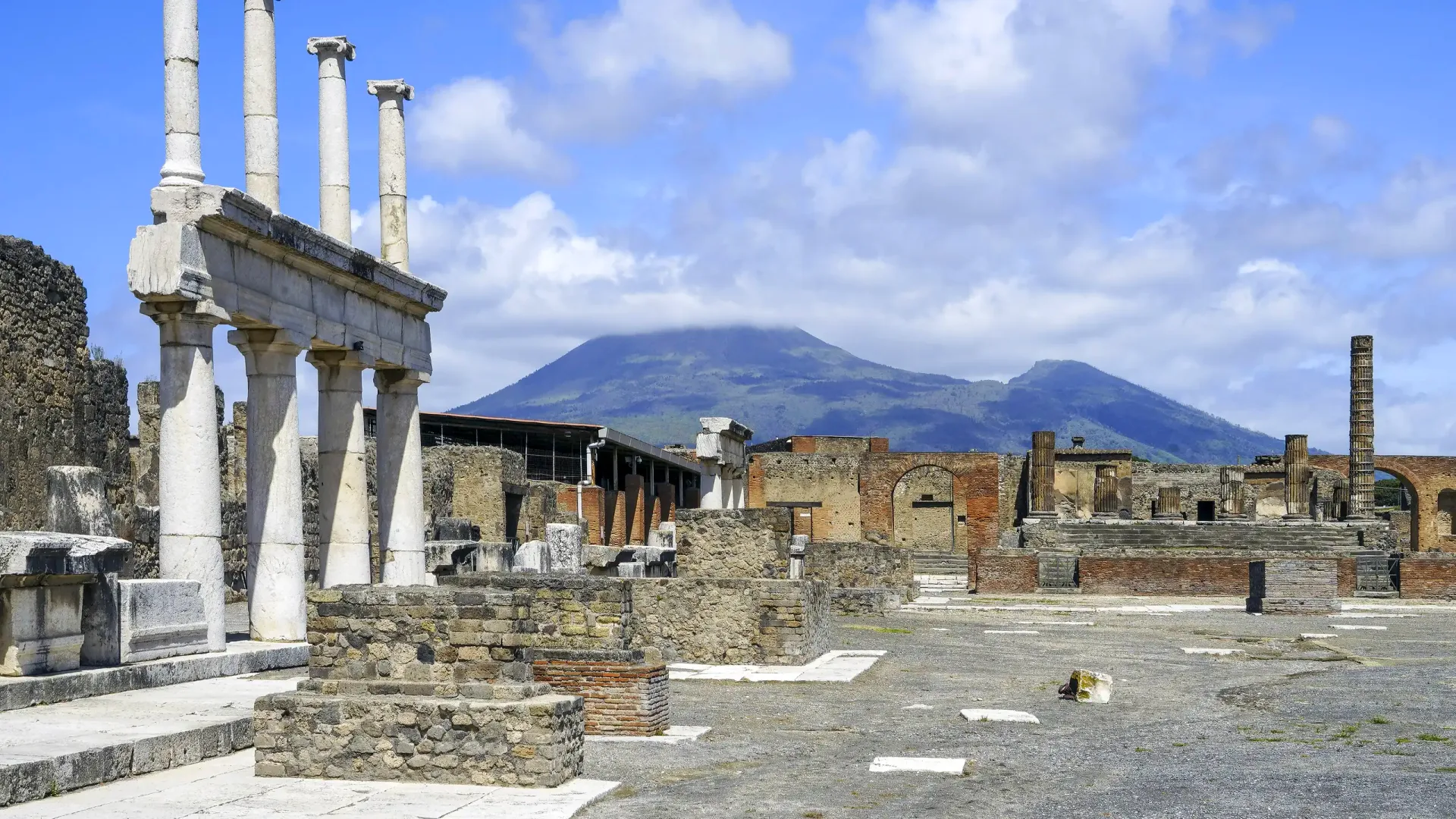
Les atouts de Pompéi relèvent de l’architecture monumentale et décorative. La colonnade du Forum avec le Vésuve en toile de fond offre l’un des grands clichés méditerranéens. La Maison du Faune est immense – plus de 3 000 mètres carrés – et sa mosaïque d’Alexandre, réplique in situ, remplace l’original transporté au Musée archéologique de Naples. La Maison des Vettii, récemment rouverte après une vaste restauration, dévoile quelques-unes des plus belles peintures murales érotiques et mythologiques de l’Antiquité romaine. La Villa des Mystères (hors les murs, billet Plus ou Grand Pompéi requis) abrite le cycle dionysiaque – grandeur nature, couleurs quasi intactes : la plus importante peinture figurative romaine encore visible dans son contexte d’origine.
Les atouts d’Herculanum résident dans le détail organique et architectural. Le Collège des Augustales conserve un plafond en bois. La Maison de la Cloison de Bois doit son nom à un paravent pliant encore debout, tel que la famille l’a refermé pour la dernière fois. Les Thermes Suburbains ont gardé leurs plafonds stuqués et un banc en bois d’olivier carbonisé. Plus frappant encore, les hangars à bateaux le long de l’ancien rivage (aujourd’hui bien à l’intérieur des terres, l’éruption ayant repoussé la côte) renferment les squelettes d’environ trois cents citoyens qui s’étaient abrités de la nuée ardente — découverts seulement dans les années 1980, ils sont exposés in situ et offrent une rencontre humaine plus directe que les moulages en plâtre de Pompéi. La Villa des Papyrus, partiellement fouillée et en grande partie encore enfouie, a livré la seule bibliothèque intacte de textes grecs et latins parvenue du monde antique.
Le Musée Archéologique National de Naples (MANN) abrite une grande partie des plus beaux chefs-d'œuvre de mosaïques et fresques extraits des deux sites aux XVIIIe et XIXe siècles – la mosaïque d'Alexandre dans son état d'origine, les collections érotiques du Cabinet Secret, et les sculptures Farnèse. Sans le MANN, vous n'avez vu que la moitié de chaque cité. Un itinéraire de trois jours dans le golfe de Naples, enchaînant Pompéi, Herculanum et le MANN, est la recommandation la plus forte du concierge pour tout visiteur dont les cités ensevelies sont l'attraction principale.
Foules, fluidité et expérience du visiteur
Pompéi attire environ 3,5 millions de visiteurs par an, tandis qu’Herculanum n’en reçoit qu’une fraction – les estimations actuelles oscillent entre 400 000 et 600 000 selon l’année. Conséquence pratique : même en pleine pression estivale, Herculanum reste comparativement aéré, et les salles phares se visitent sans bousculade. À Pompéi, en juillet à midi, la foule est dense devant la Maison des Vettii, le Lupanare et la Villa des Mystères ; à la même heure, Herculanum semble presque confidentiel. Pour les voyageurs peu tolérants à l’affluence, Herculanum offre une expérience nettement plus douce.
Sur le plan logistique, Herculanum est également plus commode. Le site est plus compact, les rues sont pavées de manière plus régulière (les authentiques dalles d’Herculanum, plus petites, évitent les entorses que provoquent les profondes ornières de basalte de Pompéi), et l’entrée moderne du Corso Resina vous mène directement, par une rampe, dans la zone fouillée, sans longue approche. La distance à parcourir pour couvrir l’ensemble du site est de deux à trois kilomètres, contre huit à dix pour Pompéi. Le site ferme également selon des horaires différents de ceux de Pompéi — vérifiez les heures sur le site officiel d’Herculanum avant de réserver votre journée.
En contrepartie, Herculanum offre une expérience plus réduite, plus calme et plus concentrée. Les visiteurs en quête de la vision panoramique d’une cité romaine – des rues qui s’évanouissent dans trois directions, un forum capable d’accueillir des milliers de personnes, un amphithéâtre de 20 000 places – ne la trouveront pas ici. Ils découvriront l’intime, le domestique, le carbonisé. Laquelle de ces deux expériences l’emporte dépend entièrement de ce que le voyageur est venu chercher.
Comment combiner les deux — le programme sur deux jours
L'itinéraire combiné le plus fluide, au départ de Sorrente ou de Naples, se déroule sur deux jours. Premier jour : Pompéi avec un créneau d'entrée à 09h00, pour parcourir les insulae occidentales et centrales avant la chaleur, déjeuner sur place ou retourner à Sorrente, puis explorer la moitié orientale (Via dell'Abbondanza, l'amphithéâtre, le Jardin des Fugitifs) en fin d'après-midi. Un billet Plus donne accès à la Villa des Mystères ; un billet Grande Pompéi permet d'étaler la visite ou de reporter les villas suburbaines à un autre jour. Deuxième jour : Herculanum le matin (compter trois heures), puis le Musée Archéologique National de Naples l'après-midi pour admirer les plus beaux artefacts des deux sites, ou l'ascension du Vésuve si l'énergie et la météo le permettent.
Faire les deux en une seule journée est physiquement possible — elles sont distantes de vingt minutes sur le Circumvesuviana — mais c’est rarement la bonne décision. Pompéi à elle seule exige quatre à six heures sans précipitation ; la réduire à trois pour dégager l’après-midi à Herculanum, c’est renoncer aux villas suburbaines, à l’amphithéâtre, ou aux deux. La plupart des voyageurs qui tentent le combo en un jour rapportent une fatigue pompéienne au moment d’arriver à Herculanum et se retrouvent incapables d’accorder au site plus petit l’attention minutieuse qu’il mérite. L’exception, pour les marcheurs déterminés, c’est une demi-journée par site : Pompéi de 9h00 à 12h30 en ne couvrant que le circuit central des incontournables, déjeuner puis Circumvesuviana jusqu’à Ercolano, Herculanum de 14h30 à 17h00.
Les billets sont distincts. Il n'existe pas de billet combiné Pompéi-Herculanum ni de pass trois jours pour la baie de Naples incluant les deux sites et le Vésuve — les opérateurs sont différents. Le billet « Grande Pompéi » ne couvre que les sites du réseau pompéien (Oplontis, Stabies, Boscoreale), pas Herculanum. Achetez votre entrée pour Herculanum séparément, via son canal officiel ou sur place. L'accès au sommet du Vésuve fait l'objet d'un troisième billet, géré par le Parco Nazionale del Vesuvio.
Questions fréquentes
Si vous ne disposez que d’une journée, vaut-il mieux visiter Pompéi ou Herculanum ?
Pompéi. C’est son ampleur qui rend l’histoire de l’éruption tangible, et ses sites phares — le Forum, la Maison du Faune, l’amphithéâtre, les moulages des corps — sont ce que la plupart des voyageurs viennent voir dans la baie de Naples. Herculanum, c’est la visite plus intime et plus calme, celle qu’on réserve pour un deuxième jour.
Est-il possible de visiter Pompéi et Herculanum le même jour ?
Physiquement oui, confortablement non. Les deux sites sont séparés de vingt minutes sur la ligne Circumvesuviana de Sorrente, mais Pompéi mérite à elle seule quatre à six heures de visite, et la plupart des visiteurs sont trop épuisés pour absorber Herculanum ensuite. Si vous tenez absolument à les combiner, consacrez Pompéi de 9h00 à 12h30 avec un parcours ciblé sur les insulae centrales, déjeunez dans le train, puis visitez Herculanum de 14h30 à 17h00.
Quel site possède les fresques les mieux conservées ?
Toutes deux possèdent des fresques exceptionnelles, mais d’une nature différente. Celles de Pompéi impressionnent par leur ampleur et leur étendue – des dizaines de maisons, le cycle dionysiaque de la Villa des Mystères, la Maison des Vettii récemment rouverte. À Herculanum, la peinture murale est plus concentrée ; ce qui la rend unique, c’est la conservation, aux côtés des fresques, de meubles en bois carbonisés et d’éléments architecturaux que Pompéi a perdus.
Pourquoi Herculanum conserve-t-elle des objets en bois alors que Pompéi n’en a pas ?
Des mécanismes d’ensevelissement différents. Pompéi a été recouverte par une pluie de cendres refroidies qui a figé les formes mais laissé la matière organique se décomposer. Herculanum, elle, a été ensevelie par une coulée pyroclastique surchauffée qui a carbonisé le bois et autres matières organiques au lieu de les consumer. Résultat : portes, poutres, lits, paravents, et même des pains ont survécu à Herculanum, là où ils ont disparu à Pompéi.
Quel site est le moins fréquenté ?
Herculanum, et de loin. Pompéi attire environ 3,5 millions de visiteurs par an, concentrés dans les maisons les plus célèbres ; Herculanum n’en reçoit qu’une fraction, répartie sur un site plus petit et mieux maîtrisé. Même en pleine affluence estivale, Herculanum conserve une impression d’espace.
Lequel est le meilleur pour l’accessibilité ?
Les deux sites ont nettement progressé. Pompéi propose l'itinéraire accessible « Pompéi pour tous », qui couvre le Forum, la Maison du Faune, les Thermes du Forum et le Macellum sur des pavages de plain-pied – soit environ 15 % du site en superficie, mais le cœur des vestiges. Herculanum, plus compact et aux rues mieux pavées, offre une expérience globalement plus douce aux visiteurs à mobilité réduite, même si la signalétique officielle des parcours accessibles y est moins développée.
Existe-t-il un billet combiné pour Pompéi et Herculanum ?
Non. Les deux sites sont gérés par des opérateurs distincts, vendus sur des plateformes de billetterie différentes, et il n'existe pas de pass combiné. Le pass trois jours de Pompéi ne couvre que les sites du réseau pompéien (Oplontis, Stabies, Boscoreale), pas Herculanum. Achetez l'entrée d'Herculanum séparément.
Comment se rendre de Pompéi à Herculanum ?
Reprenez la ligne Circumvesuviana Sorrento à Pompei Scavi-Villa dei Misteri et roulez vers le nord en direction de Naples pendant une vingtaine de minutes. Descendez à Ercolano Scavi. Depuis la gare, comptez dix minutes de marche en descente pour rejoindre l’entrée d’Herculanum, sur le Corso Resina.
Dois-je ajouter le Vésuve aussi ?
Seulement si vous disposez d’un troisième jour ou d’une énergie débordante. Le sommet du Vésuve (Gran Cono) fait l’objet d’un billet séparé, géré par le Parco Nazionale del Vesuvio. On y accède par une navette depuis la gare d’Ercolano jusqu’au parking supérieur, avant une randonnée aller-retour d’environ quatre-vingt-dix minutes jusqu’au cratère. Associer cette excursion à Pompéi ou Herculanum dans la même journée est épuisant ; nous vous recommandons de lui consacrer un après-midi à part.
Qu’apporte de plus le Musée Archéologique de Naples ?
La plupart des pièces les plus remarquables de Pompéi et d’Herculanum ont été transférées au Musée archéologique national de Naples (MANN) aux XVIIIe et XIXe siècles – la mosaïque d’Alexandre, les érotiques du Cabinet secret, les sculptures Farnèse, les fresques portables les plus précieuses. Sans le MANN, vous n’avez vu que la moitié de l’une ou l’autre cité. Un itinéraire de trois jours dans la baie de Naples, enchaînant Pompéi, Herculanum et le MANN, constitue la plus solide semaine patrimoniale possible.