 Zonder wachtrij beschikbaar
 De beste tijd om Pompeii te bezoeken
Wanneer de hitte draaglijk is, de cruisetoeristen dunner gezaaid zijn en de fresco's het lage winterlicht vangen.
Pompeii is elke dag geopend, behalve op 1 januari, 1 mei en 25 december, maar dat betekent niet dat elke dag even geschikt is voor een bezoek. De 66 hectare aan onbeschaduwde basaltstraten gedragen zich heel anders in de lage februarizon dan in de felle middagzon van augustus, en de door de uitbarsting gevormde stad kent een vrij vast jaarlijks ritme van cruisetoeristen, Italiaanse schoolgroepen en drukte op de eerste gratis zondag van de maand. De keuze van het reismoment is veruit de grootste invloed die een bezoeker heeft op de kwaliteit van de dag – groter dan het type ticket, de route of de gids. Deze gids neemt de kalender maand voor maand door, benoemt de feestdagen die de drukte doen toe- of afnemen, en geeft de eerlijke conciërgekeuze van de vier of vijf weken waarin Pompeii op zijn best is.
De twee harde grenzen — hitte en laatste toegang
Twee praktische overwegingen bepalen elke beslissing over een bezoek aan Pompeii. De eerste is de zomerse hitte. Van half juni tot begin september absorbeert het vulkanische straatgesteente de hele ochtend zonlicht en straalt het ’s middags weer uit, waardoor de gevoelstemperatuur in de ruïnes aanzienlijk hoger ligt dan de officiële meting op de luchthaven van Napels. De EHBO-post van het park behandelt elke warme dag echte gevallen van hitte-uitputting. Er is weinig schaduw – Romeinse straten waren smal maar open naar de hemel, en de weinige overgebleven daken zijn schaars. De tweede is het laatste toegangstijdstip, dat per seizoen wisselt: tijdens de lange zomerperiode is de laatste toegang via Porta Ercolano om 17:30 uur, terwijl de wintertijd dit terugbrengt naar 15:30 uur. Het park sluit kort daarna. Een ticket voor 13:00 uur in november laat misschien tweeënhalf uur bruikbaar daglicht binnen de poorten over; hetzelfde tijdvak in juli biedt vijf uur.
Door deze twee factoren te combineren valt de kalender uiteen in drie ruwe zones. De overgangsmaanden (april, mei, eind september, oktober) bieden lange bruikbare uren, beheersbare hitte en redelijke drukte. De hoogzomer (half juni tot begin september) geeft de langste uren, maar de ergste hitte en de zwaarste bezoekersdruk van cruisedagjesmensen uit Napels en Sorrento. De koude maanden (november tot maart) leveren stille ruïnes en prachtig laag invallend licht op de fresco's, maar een kortere bruikbare dag en het risico op gladde basaltstraten door winterregen. Er is geen perfecte maand voor iedereen — er is echter wel een duidelijke beste maand voor elke prioriteit, en de rest van deze gids noemt ze.
Bevestig drie dingen in de twee weken voor je bezoek: de actuele dagelijkse openingstijden en laatste toegangstijd voor jouw specifieke datum, of er tijdelijk belangrijke nevenhuizen gesloten zijn vanwege restauratie, en of er een eerste zondag of gratis toegangsdag in jouw periode valt. De officiële parksite pompeiisites.org publiceert alle drie. Een goed gekozen datum op basis van deze variabelen levert alles wat de site te bieden heeft; een blind gekozen datum is de datum waarop mensen zeggen dat het te warm, te druk of te snel voorbij was.
Maand per maand — wat elk seizoen brengt
Januari en februari zijn rustig, koud naar Campaanse maatstaven, en kort. Het toegangstijdvak van 09:00 uur geeft je het eerste uur het rijk alleen, en de lage winterzon op de beschilderde muren van het Huis van de Vettii en de Villa van de Mysteriën is uitzonderlijk mooi voor fotografie. Het nadeel is de vroege laatste toegang (15:30 uur via Porta Ercolano) en af en toe zware regen die de basaltstraten glad maakt. Sommige perifere huizen zijn om beurten gesloten vanwege onderhoud in het laagseizoen. Deze maanden zijn geschikt voor reizigers die contemplatie en fresco's belangrijker vinden dan de volledige 8–10 km hoofdroutes, en combineren vanzelfsprekend met het Archeologisch Museum van Napels op aansluitende dagen.
Maart tot half juni is de ideale periode. De dagtemperaturen lopen geleidelijk op, de wilde bloemen in de nog niet opgegraven delen komen tot bloei en de lange zomerse last-entry-tijden gaan in. Met Pasen (Pasqua) zorgt het Italiaanse lange weekend voor een flinke binnenlandse drukte; op Pasquetta (tweede paasdag) gebruiken Italiaanse families archeologische parken als picknickplek, en Pompeii voelt aanzienlijk drukker aan. Elke eerste zondag van de maand is de toegang tot alle Italiaanse staatsmusea gratis, waardoor de site onprettig vol raakt — het conciërgeadvies is om eerste zondagen volledig te mijden. Buiten deze piekdagen is een dinsdag of woensdag eind april of begin mei verreweg de beste datum voor de meeste reizigers.
Half juni tot begin september is hoogzomer en de lastigste periode. De druk van cruisereizigers en touringcars uit Napels en Sorrento piekt, de hitte is niet te onderschatten, en door de Italiaanse schoolvakanties neemt het binnenlands familietoerisme toe. Ferragosto (15 augustus) is het nationale feestweekend waarin Napels grotendeels leegloopt naar de kust en Pompeii te maken krijgt met geconcentreerd kortverblijfverkeer. Het tijdslot van 09:00 uur is in deze maanden onvermijdelijk — begin bij opening, rond het intensieve wandelgedeelte voor twaalf uur af, trek je terug voor een lange lunch, en gebruik het koelere late middaguur alleen voor overdekte ruimtes. Twee liter water per volwassene meenemen is de basis, niet de voorzorg.
Half september tot en met oktober biedt dezelfde temperaturen en bloemenpracht als mei, maar met aanzienlijk minder drukte — het cruiseseizoen loopt ten einde, Italiaanse scholen zijn weer begonnen en het weer is betrouwbaar warm zonder overdreven te zijn. De laatste week van september en de eerste drie weken van oktober zijn de stille favoriet van de conciërge. November en december sluiten het jaar af zoals januari het opent: rustig, kort en het meest geschikt voor een gericht bezoek aan de centrale insulae in plaats van een volledige rondgang. De site is gesloten op 25 december en heropent op 26 december met beperkte openingstijden.
Gratis-eerste-zondag en andere druktemomenten
Italiaanse staatsmusea en archeologische parken, waaronder Pompeii, bieden op de eerste zondag van elke maand gratis toegang voor alle bezoekers. De intentie is lovenswaardig, maar operationeel levert dit problemen op: op gratis zondagen staan er al voor openingstijd rijen bij elke ingang, de buitenwijken (Villa dei Misteri, Villa di Diomede) zijn halverwege de ochtend vol, en de topattracties zijn eerder een drommenmassa dan een begaanbare ruimte. Staat uw prioriteit bij een fotografische en contemplatieve ervaring van Pompeii, kies dan een andere zondag dan de eerste, of – nog beter – een doordeweekse dag. Een conciergeticket op een niet-gratis dag biedt u een rustiger terrein dan een gratis ticket op een overvolle dag.
De druk van schoolgroepen is de andere voorspelbare golf. Italiaanse schoolgroepen arriveren op dinsdag- tot donderdagochtend tijdens het schooljaar – grofweg van half september tot half juni, met vakanties rond Kerst en Pasen – en concentreren zich rond het Forum, het Huis van de Faun, de Lupanare en het amfitheater. Rond het begin van de middag zijn ze meestal weer weg. Als u het tijdslot van 09:00 uur neemt, bent u hen voor in het westelijke deel van de stad; met het tijdslot van 13:00 uur kunt u het oostelijke deel (Via dell'Abbondanza naar het amfitheater) in hun kielzog verkennen. Buitenlandse touringcars pieken op doordeweekse ochtenden van april tot oktober en volgen een vergelijkbaar patroon rond de centrale bezienswaardigheden.
Ook specifieke evenementen beïnvloeden de drukte. Belangrijke Italiaanse nationale feestdagen (25 april Bevrijdingsdag, 2 juni Republiekdag, 1 november Allerheiligen) trekken veel binnenlandse bezoekers naar de site. De aankomst van cruiseschepen in de havens van Napels en Salerno zorgt ervoor dat bustochten zich in de zomer concentreren op dinsdag tot en met donderdag. Daarentegen trekt het feest van San Gennaro in Napels (19 september) bezoekers juist weg van Pompeii, wat die dag juist rustig kan zijn op de site.
Licht, fotografie en de fresco's
Pompeii beloont fotografen die nadenken over licht. De fresco-interieurs — de dionysische cyclus van de Villa dei Misteri, de erotische en mythologische panelen van de Casa dei Vettii, de vestibule van de Casa del Poeta Tragico — worden bewust op een laag omgevingsniveau verlicht om de pigmenten te beschermen. Het duurt even voordat je ogen wennen bij binnenkomst. Het Pompeiaans rood, oker en diep violet komen het beste tot hun recht in strijklicht aan het begin of einde van de dag. Dat betekent dat een tijdslot om 09:00 uur in de winter en om 13:00 uur in de vroege zomer de mooiste interieurtinten oplevert. Statieven zijn niet toegestaan; uit de hand fotograferen met een snelle lens is de praktische aanpak.
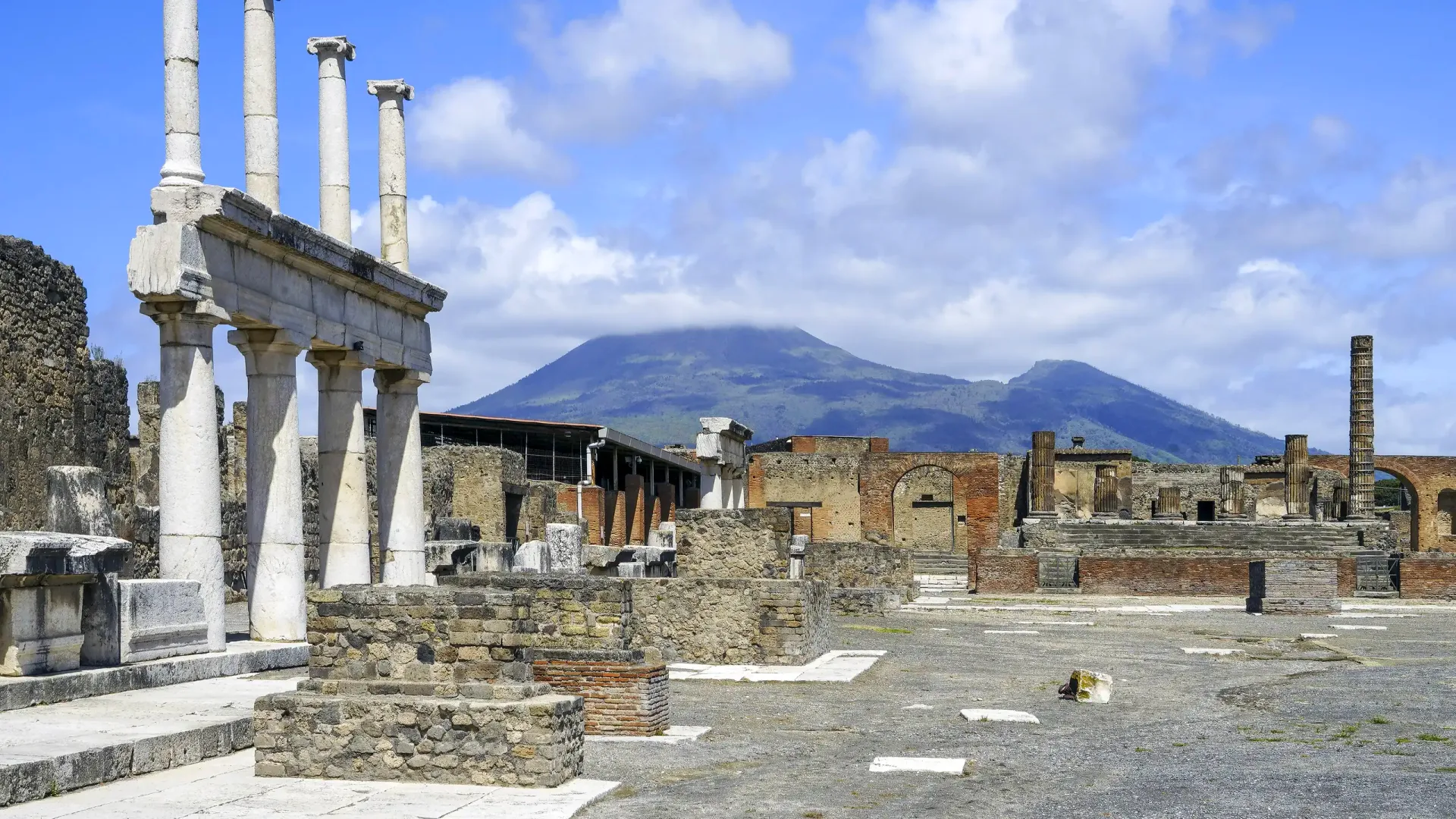
Buiten is de canonieke foto van de zuilengang van het Forum met de Vesuvius erachter het beste halverwege de ochtend, wanneer de vulkaan verlicht is maar de zuilengang nog niet in het vlakke middaglicht staat. De met basalt geplaveide Via dell'Abbondanza, die oostwaarts naar het amfitheater leidt, levert sterke foto's op in tegenlicht in de namiddag, wanneer het gepolijste, door wagensporen gegroefde steen het zonlicht vangt. De Tuin der Vluchtelingen — gipsafgietsels in de houding waarin ze stierven — is emotioneel en visueel het sterkst bij zacht, bewolkt licht in plaats van felle zon, die de afgietsels vlak maakt en details wegspoelt. Bewolkte ochtenden in november en februari zijn stilletjes uitstekend voor dit deel van de site.
Sluitingen, openingstijden en wat u vóór uw reis moet controleren
Pompeii is alleen gesloten op 1 januari, 1 mei en 25 december. De rest van het jaar is het dagelijks geopend, ook op paaszondag, paasmaandag en Ferragosto. De openingstijd is het hele jaar door 09:00 uur; de laatste toegang via Porta Ercolano is in de zomer om 17:30 uur en in de winter om 15:30 uur, waarna de poorten kort daarna sluiten. De tickets Express, Plus en Grande Pompei geven elk recht op een van twee toegangsvensters — een ochtendvenster (09:00–13:00 uur) of een middagvenster (13:00–17:30 uur). U kunt op elk moment binnen uw geboekte venster naar binnen en blijven tot het park sluit. Een ticket geeft geen recht op uit- en opnieuw binnenkomen.
Drie dingen om de week voor vertrek te controleren: de actuele openingstijden en laatste toegangstijd voor jouw specifieke datum (deze kunnen verschuiven rond grote Italiaanse feestdagen), of een van de top-huizen die je het liefst wilt zien tijdelijk gesloten is voor restauratie (de officiële site vermeldt actuele sluitingen), en of jouw datum een gratis-eerste-zondag is. De officiële parksite pompeiisites.org publiceert alle drie. Een bezoek dat rond deze drie variabelen is gepland, levert wat Pompeii te bieden heeft; wie ze negeert, eindigt met een wachtrij van 90 minuten, een afgezet Huis van de Vettii en een te korte middag voordat de poorten sluiten.
Veelgestelde vragen
Wat is over het algemeen de beste maand om Pompeii te bezoeken?
Eind april tot half mei, of de laatste week van september tot en met de eerste drie weken van oktober. In deze periodes heb je aangename dagtemperaturen, het lange zomerprogramma met late laatste toegang, een beheersbare drukte van cruiseschepen en touringcars, en je vermijdt zowel de extreme zomerhitte als de vroege sluitingstijden in de winter. De conciërge adviseert een dinsdag of woensdag buiten de Italiaanse schoolvakanties.
Is Pompeii op maandag geopend?
Ja. Pompeii is elke dag van het jaar geopend, behalve op 1 januari, 1 mei en 25 december. Maandagen zijn gewone openingsdagen. Dat onderscheidt het van veel Italiaanse staatsmusea en paleizen, die op maandag gesloten zijn.
Moet ik de gratis eerste zondag van de maand vermijden?
Ja, als een rustige fotografie-ervaring voor u belangrijk is. Op de eerste zondag van de maand is de toegang tot staatsmusea in heel Italië gratis, en wordt Pompeii onprettig druk — rijen bij elke ingang nog voor openingstijd, de buitenwijken bereiken halverwege de ochtend hun maximale capaciteit, en de topwoningen werken in schuifmodus. Kies een andere zondag of een doordeweekse dag.
Hoe erg is Pompeï in juli en augustus?
Echt pittig. De gevoelstemperatuur op de basaltstraten ligt flink hoger dan de officiële luchttemperatuur in Napels, schaduw is schaars en de EHBO-post van het park behandelt elke zomerdag echte hitte-uitputting. Is de zomer je enige optie? Kies dan voor het tijdslot van 09:00 uur, neem per volwassene minstens twee liter water mee, rond de inspannende wandeling vóór twaalf uur af en zoek tijdens de hete middaguren de binnenruimtes op. De onbeschaduwde oostelijke zone (Amfitheater, Palaestra) kun je het beste als eerste doen of overslaan op de heetste dagen.
Hoe laat sluit de locatie in de winter en in de zomer?
Openingstijden zijn het hele jaar door van 09:00 uur. De laatste toegang via Porta Ercolano is om 17:30 uur in de zomerperiode en om 15:30 uur in de winterperiode; de poorten sluiten kort daarna. De officiële website van het park publiceert jaarlijks de exacte data – controleer de openingstijden voor uw specifieke bezoekdatum voordat u boekt.
Zijn er echt maar twee toegangsmomenten?
Ja. Toegang wordt verkocht in een van twee tijdsblokken — een ochtendblok (09:00–13:00) of een middagblok (13:00–17:30) — en u kunt op elk moment binnen uw geboekte blok binnenkomen en blijven tot sluitingstijd. Kies het ochtendblok voor koeler wandelen en helderder licht, vooral in de warmere maanden; kies in de winter het middagblok voor warmere temperaturen en minder drukte rond het middaguur.
Is Pompeii geopend op Italiaanse feestdagen zoals Pasen en Ferragosto?
Ja. Pompeii is geopend op eerste paasdag, tweede paasdag (Pasquetta) en Ferragosto (15 augustus). Dit zijn enkele van de drukste dagen van het jaar, omdat Italiaanse gezinnen dan in eigen land op reis gaan. Als u een rustiger bezoek wilt, kies dan een datum vlak voor of na deze feestdagen, maar niet erop.
Welke dag van de week is het rustigst?
Vrijdagmiddagen en de late helft van zondag zijn doorgaans de rustigste momenten van de week, omdat de schoolgroepen zijn vertrokken en de dagjesmensen met touringcars zijn doorgestroomd naar andere Campaanse bezienswaardigheden. Dinsdag tot en met donderdagochtend zijn het drukst, met een combinatie van school- en touringcarverkeer tijdens het schooljaar.
Op welk moment van de dag maak je de mooiste fresco-foto's?
Vroeg in het tijdslot van 09:00 uur of laat in dat van 13:00 uur, wanneer de zon laag staat en schuin invalt. De fresco's in de vertrekken worden bewust spaarzaam verlicht om het pigment te beschermen, dus fotograferen uit de hand met een lichtsterke lens werkt beter dan met een statief (dat bovendien beperkt is). Vermijd het harde middaguur rond de toegang van 13:00 uur — het licht wordt vlak, het contrast verdwijnt.
Zijn er huizen gesloten tijdens mijn bezoek?
Waarschijnlijk wel. Met 66 hectare en tientallen huizen met fresco’s die om beurten worden gerestaureerd, zijn er altijd een paar gesloten en een paar net heropend. De officiële site pompeiisites.org publiceert de actuele lijst. Grote recente heropeningen zijn onder meer het gerestaureerde Huis van de Vettii; recente sluitingen wisselen. Check dit uiterlijk twee weken voor je reis.